Author: Alka

  • Sector 44 Gurgaon: Location, Connectivity, Lifestyle and Investment Guide 2026

    Sector 44 Gurgaon: Location, Connectivity, Lifestyle and Investment Guide 2026

    Introduction

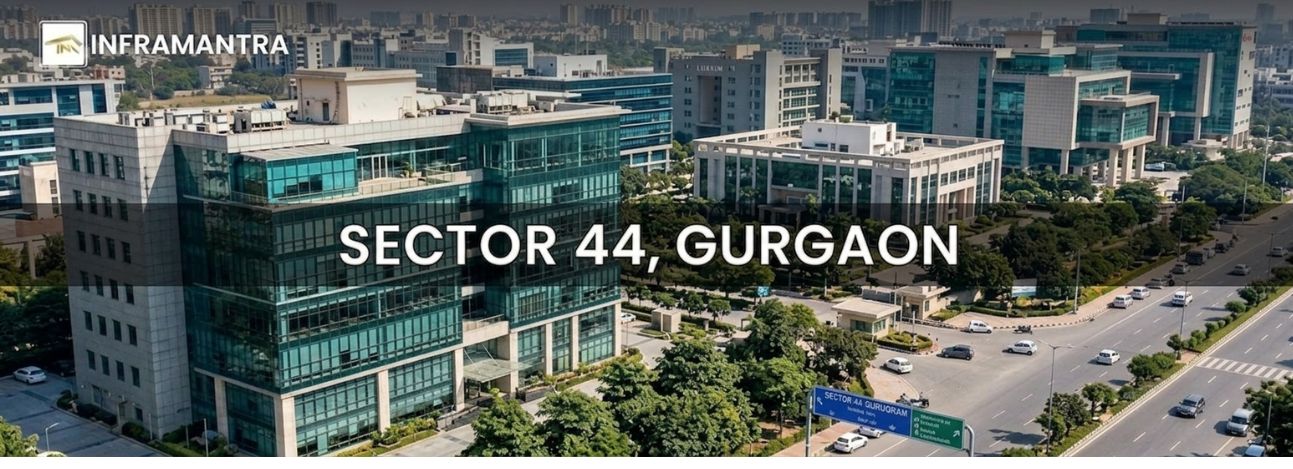
    Sector 44 Gurgaon is a well-established residential locality in Gurugram, Haryana, with PIN code 122003. It is located near Golf Course Road, NH-48, and HUDA City Centre, offering excellent connectivity to major business and residential hubs. The nearest major metro station is Millennium City Centre Gurugram Metro Station (formerly HUDA City Centre) on the Yellow Line.

    Sector 44 Gurgaon is one of the established residential and institutional localities in Central Gurgaon. Its strategic location near Golf Course Road, MG Road, Sohna Road and Millennium City Centre Gurugram Metro Station makes it an attractive address for homebuyers, working professionals and property investors. Unlike many emerging sectors on the outskirts of Gurgaon, Sector 44 benefits from mature infrastructure, established neighbourhoods and proximity to major employment hubs.

    The locality is particularly suitable for people who want to stay close to Gurgaon’s major business districts while still having access to established residential communities, schools, hospitals, shopping and daily conveniences.

    Sector 44 Gurgaon: Location Overview

    Sector 44 is situated in Central Gurgaon and falls under the 122003 PIN code. The area has a planned urban layout with a combination of apartments, independent floors, plotted residences, institutional establishments and commercial spaces.

    One of its biggest advantages is its central location. Residents can access several important Gurgaon corridors without having to travel deep into developing outskirts.

    Key highlights of Sector 44 Gurgaon

    • Prime Central Gurgaon location
    • Close to Golf Course Road and MG Road
    • Near Millennium City Centre Gurugram Metro Station
    • Good access to Sohna Road
    • Established residential neighbourhood
    • Close to offices and commercial hubs
    • Strong social infrastructure
    • Suitable for both end-users and investors

    Sector 44 is therefore more of a mature, established locality than a newly developing residential sector.

    Connectivity from Sector 44 Gurgaon

    Connectivity is one of the strongest reasons people consider property in Sector 44.

    The locality is well connected with Golf Course Road, MG Road and other important Gurgaon corridors, while Millennium City Centre Gurugram provides access to the Delhi Metro Yellow Line network. Locality portals also identify connectivity to MG Road, Golf Course Road and the metro station as major advantages of Sector 44.

    Major connectivity advantages

    1. Metro Connectivity: Millennium City Centre Gurugram Metro Station is one of the major metro access points for the locality.
    2. Golf Course Road: The sector provides convenient access to the premium Golf Course Road corridor.
    3. MG Road: MG Road’s commercial and retail ecosystem is accessible from the area.
    4. Sohna Road: The sector also benefits from connectivity towards Sohna Road and surrounding residential corridors.
    5. Road Network: Established internal roads and nearby arterial roads make daily commuting comparatively convenient.

    For professionals working in Central Gurgaon, this connectivity can significantly reduce dependence on long-distance commuting.

    There are several reasons behind the continued demand for property in Sector 44.

    1. Established Location

    Sector 44 is already developed, which means buyers do not have to depend entirely on future infrastructure promises. Roads, markets, institutions and residential communities are already present.

    2. Employment Proximity

    The locality benefits from its proximity to established commercial and employment hubs. Nearby areas include Unitech Cyber Park, DLF World Tech Park, AS Business Park and other office destinations, supporting demand from corporate professionals.

    3. Strong Rental Potential

    Because of its location and employment connectivity, the area attracts working professionals looking for homes close to offices. Recent locality estimates indicate apartment rents can range approximately from ₹35,000 to ₹1 lakh per month, depending on property size, condition and amenities.

    4. Social Infrastructure

    Residents have access to schools, hospitals, markets, malls and commercial establishments in and around Central Gurgaon.

    5. Premium Central Gurgaon Positioning

    For buyers who prefer established Gurgaon over peripheral development zones, Sector 44 offers a strong combination of location, convenience and lifestyle.

    Schools and Educational Institutions Near Sector 44

    Families considering property in Sector 44 Gurgaon can access several educational institutions in and around the locality.

    Some commonly cited institutions and nearby options include:

    • Amity International School
    • Euro International School
    • Delhi Public School
    • Orchids The International School
    • KR Mangalam World School
    • GD Goenka Signature School
    • SOIL Institute of Management

    The availability of educational institutions within the broader Central Gurgaon catchment adds to the area’s appeal for families.

    Healthcare Facilities Near Sector 44

    Healthcare accessibility is another important advantage.

    Residents can access established hospitals and healthcare centres in nearby sectors, including:

    • Artemis Hospital, Sector 51
    • Fortis Healthcare facilities
    • Paras Hospital
    • Mayom Hospital
    • Vijay Hospital

    Artemis Hospital is officially located in Sector 51, Gurugram, and provides multispecialty healthcare services.

    For families, proximity to established medical facilities can be an important consideration when comparing different Gurgaon localities.

    Shopping, Dining and Daily Convenience

    Sector 44 is surrounded by a mature retail and lifestyle ecosystem. Local markets handle regular household needs, while larger commercial destinations provide shopping, dining and entertainment options.

    Popular destinations cited around the locality include:

    • Ardee Mall
    • Galleria Market
    • Gold Souk Mall
    • HUDA City Centre area
    • South Point Mall
    • Nearby restaurants and cafés along Golf Course Road

    This combination of local convenience and premium retail makes Sector 44 practical for both families and working professionals.

    Sector 44 Gurgaon for Investment: Is It a Good Choice?

    Sector 44 can be considered by investors seeking an established Central Gurgaon location rather than a high-risk, high-growth peripheral market.

    Potential advantages for investors

    • Established infrastructure
    • Strong corporate catchment
    • Good metro and road connectivity
    • Consistent rental demand
    • Premium Central Gurgaon positioning
    • Limited availability of well-located land and established residential assets

    At the same time, investors should remember that premium established localities may have a higher entry cost than developing sectors. The investment decision should therefore consider entry price, rental income, property age, maintenance costs, title documentation and future resale demand.Why Is Sector 44 Gurgaon Popular for Real Estate?

    Who Should Buy Property in Sector 44?

    Sector 44 may be particularly suitable for:

    1. Corporate Professionals working in Central Gurgaon.
    2. Families looking for established schools, hospitals and markets.
    3. Rental Investors targeting professionals.
    4. End-Users who prefer an established location over an under-development corridor.
    5. Long-Term Investors seeking exposure to a mature Central Gurgaon micro-market.

    For buyers primarily looking for new luxury projects with modern amenities, newer Gurgaon corridors may provide a wider range of options.

    Is Sector 44 Gurgaon a Good Place to Live?

    Yes, Sector 44 Gurgaon is one of the established residential locations worth considering in Central Gurgaon, especially for buyers who value connectivity, social infrastructure and proximity to employment hubs.

    Its strongest advantages are its central location, access to metro and major roads, mature residential ecosystem and proximity to business districts. Property prices, however, can vary considerably across different buildings and property formats, so buyers should compare multiple options before finalizing a deal.

    For someone planning to buy a home in Sector 44 Gurgaon, the ideal property depends on budget, preferred configuration, rental requirements and whether the objective is end-use or investment.

    FAQS

    1. Is Sector 44 Gurgaon close to the metro?

    Yes. Sector 44 is well connected to Millennium City Centre Gurugram Metro Station, making metro access one of the locality’s major advantages.

    2. What are the major schools near Sector 44 Gurgaon?

    Nearby educational options include Amity International School, Delhi Public School, Euro International School, Orchids The International School and other institutions in the Central Gurgaon catchment.

    3. Which hospitals are near Sector 44 Gurgaon?

    Artemis Hospital in Sector 51 is one of the major nearby healthcare destinations, along with other hospitals and clinics in the surrounding Gurgaon sectors.

    4. Is Sector 44 Gurgaon good for rental investment?

    It can be. Its proximity to corporate offices and established connectivity supports rental demand, particularly among professionals working in and around Central Gurgaon.

    5. Which roads are easily accessible from Sector 44?

    Sector 44 provides convenient connectivity toward Golf Course Road, MG Road and Sohna Road, making it strategically positioned within Central Gurgaon.

    6. Is Sector 44 Gurgaon better for end-use or investment?

    It can work for both. End-users benefit from established infrastructure and convenience, while investors may benefit from rental demand and the locality’s premium Central Gurgaon positioning. The final decision should depend on property-specific pricing and financial returns.

    About InfraMantra

    InfraMantra is a real estate consultancy that helps homebuyers and investors explore property opportunities across Gurgaon and other major real estate markets. From identifying suitable locations to comparing projects and understanding investment options, InfraMantra aims to simplify the property-buying journey.

    For buyers considering Sector 44 Gurgaon, professional property guidance can help you shortlist the right options based on your budget, lifestyle requirements and long-term investment goals.

    You are also like to read:

    Top 5 Localities Near DLF Cyber City, Gurgaon

    Sector 53 Gurgaon: A Premium Address on Golf Course Road

    Alka Gurung
    Written by

    Alka Gurung

    SEO Content Writer

    Alka Gurung is an SEO Content Writer at INFRAMANTRA, with 15 years of experience in content writing across real estate and other industries. She specialises in covering Gurgaon’s real estate market, luxury residential projects, and practical guides for homebuyers and investors. Her expertise lies in turning market data and on-ground insights into clear, informative, and useful content that helps readers make confident property decisions.

  • What is GPA in Property? Meaning, Legal Validity, Uses and Risks Explained (2026)

    What is GPA in Property? Meaning, Legal Validity, Uses and Risks Explained (2026)

    Introduction

    GPA in property stands for General Power of Attorney, a legal document that allows one person to authorise another to act on their behalf in specified matters. It can be useful for managing property-related tasks, especially when the owner cannot be physically present.

    A General Power of Attorney (GPA) is a legal document through which a property owner (the Principal) authorizes another person (the Attorney Holder or Agent) to perform specific tasks on their behalf.

    However, there is often confusion about whether a GPA transfers ownership of a property. The simple answer is no. A General Power of Attorney allows a person to act on behalf of the property owner but does not transfer legal ownership.

    In this guide, we’ll explain what GPA in property means, how it works, its legal validity, risks, and when you should or should not use it.

    How Does a General Power of Attorney Work?

    General Power of Attorney becomes effective once it is properly executed and, where required, registered according to applicable laws.

    For example, suppose an NRI owns an apartment in Gurgaon but lives in Canada. Instead of travelling to India for every property-related task, they can execute a GPA in favour of a trusted family member. The attorney holder can then manage the property, collect rent, coordinate maintenance, or sign documents within the authority granted in the GPA.

    The powers given to the attorney holder depend entirely on the terms mentioned in the document. Therefore, it is important to clearly define the scope of authority to prevent misuse.

    Why is GPA Used in Property Transactions?

    A GPA is commonly used because it offers convenience and flexibility.

    Some common situations include:

    • Property owners living abroad (NRIs)
    • Senior citizens unable to manage property personally
    • Owners residing in another city
    • Individuals with multiple properties
    • Medical or personal emergencies

    Instead of travelling frequently, the owner can appoint someone trustworthy to manage routine property matters.

    However, a GPA should primarily be used for property management and representation, not as a substitute for transferring ownership.

    Is There Any Difference Between GPA And Sale Deed

    Yes, Many buyers mistakenly believe that a GPA is equivalent to a Sale Deed. This is incorrect.

    FeatureGeneral Power of Attorney (GPA)Sale Deed
    Transfers OwnershipNoYes
    Legal TitleNoYes
    Used ForProperty managementProperty transfer
    RegistrationMay be requiredMandatory
    Ownership RightsNot transferredFully transferred

    A Sale Deed is the only legally recognised document that transfers ownership from the seller to the buyer.

    Is Buying Property Through GPA Legal?

    This is one of the most frequently asked questions by property buyers.

    The Supreme Court of India, in the landmark Suraj Lamp & Industries Pvt. Ltd. vs. State of Haryana (2011) case, clarified that property ownership cannot be transferred through a GPA alone.

    The Court ruled that:

    • GPA is only an authorization document.
    • It does not create ownership rights.
    • It cannot replace a registered Sale Deed.
    • Property ownership is transferred only through a legally executed and registered Sale Deed.

    However, the Court also clarified that genuine GPAs used for property management, family arrangements, or representation remain legally valid.

    Risks of Buying Property Through GPA

    Purchasing property solely on the basis of a GPA can expose buyers to several legal and financial risks.

    1. No Legal Ownership

    The buyer does not become the legal owner merely by holding a GPA.

    2. Difficulty in Reselling

    Future buyers and financial institutions may refuse to accept GPA-based ownership.

    3. Loan Approval Issues

    Banks generally require a registered Sale Deed before approving home loans.

    Ownership disputes may arise if the original owner or legal heirs challenge the transaction.

    5. Possibility of Fraud

    If the GPA holder exceeds their authority or the document is forged, the transaction may become legally invalid.

    How to Verify a GPA Property

    Before dealing with a property involving a GPA, follow these precautions:

    • Verify whether the GPA is registered.
    • Check the identity of both the owner and attorney holder.
    • Review the powers granted in the document.
    • Confirm that the GPA has not been revoked.
    • Verify the property’s ownership records.
    • Conduct legal due diligence through a qualified property lawyer.
    • Ensure the property is free from disputes or encumbrances.

    Taking these steps can significantly reduce legal risks.

    Best Practices When Using a GPA

    To use a GPA safely:

    • Register the GPA wherever required.
    • Clearly define the attorney holder’s powers.
    • Appoint only a trusted individual.
    • Avoid using a GPA as a substitute for a Sale Deed.
    • Keep the document updated if circumstances change.
    • Seek legal advice before executing or relying on a GPA.

    Proper documentation protects both the property owner and the attorney holder.

    Conclusion

    A General Power of Attorney (GPA) is an important legal document that allows a trusted person to manage property-related matters on behalf of the owner. It is particularly useful for NRIs, senior citizens, and individuals who cannot be physically present to handle their properties.

    However, it is essential to understand that a GPA does not transfer ownership. If you are buying or selling property, always ensure the transaction is completed through a registered Sale Deed, which is the only legally valid document for transferring ownership in India.

    Before investing in any property, verify all legal documents, conduct proper due diligence, and consult experienced real estate professionals or legal experts. A well-informed decision can help you avoid disputes and protect your investment in the long run.

    If you’re planning to buy, sell, or invest in residential or commercial property, InfraMantra can help you make informed decisions with confidence. Our experienced real estate consultants assist you at every stage—from property selection and legal documentation to market insights and investment guidance—ensuring a secure and hassle-free property buying experience.

    Frequently Asked Questions (FAQs)

    1. What is the full form of GPA in property?

    GPA stands for General Power of Attorney, a legal document that authorizes another person to act on behalf of the property owner.

    2. Does a GPA transfer property ownership?

    No. A GPA only grants authority to manage or represent the owner. Ownership is transferred only through a registered Sale Deed.

    3. Can a GPA holder sell a property?

    Yes, but only if the GPA specifically grants the authority to execute a sale on behalf of the owner. The ownership transfer must still be completed through a registered Sale Deed.

    4. Is it safe to buy property through a GPA?

    Buying property solely through a GPA is not advisable. Buyers should ensure that the ownership is transferred through a registered Sale Deed to avoid legal complications.

    5. Can a General Power of Attorney be revoked?

    Yes. A property owner can revoke a GPA, subject to the terms of the document and applicable laws, unless it is irrevocable under specific legal circumstances.

    Alka Gurung
    Written by

    Alka Gurung

    SEO Content Writer

    Alka Gurung is an SEO Content Writer at INFRAMANTRA, with 15 years of experience in content writing across real estate and other industries. She specialises in covering Gurgaon’s real estate market, luxury residential projects, and practical guides for homebuyers and investors. Her expertise lies in turning market data and on-ground insights into clear, informative, and useful content that helps readers make confident property decisions.

  • Top 10 Metro Cities in India to Live and Invest (2026)

    Top 10 Metro Cities in India to Live and Invest (2026)

    Introduction

    The Top 10 Metro Cities in India are Delhi NCR, Mumbai, Kolkata, Bengaluru, Chennai, Hyderabad, Ahmedabad, Pune, Surat, and Jaipur.

    These metropolitan cities are ranked based on factors such as population, economic contribution, infrastructure, employment opportunities, and real estate growth. They serve as India’s major business, financial, technology, and industrial hubs, attracting millions of professionals, homebuyers, and investors every year.

    Whether you’re planning to relocate, invest in real estate, or explore business opportunities, understanding India’s top metro cities can help you make informed decisions.

    Top 10 Metropolitan Cities in India

    1. Delhi NCR

    Delhi NCR is India’s largest metropolitan region and the country’s political, administrative, and economic powerhouse. The region includes Delhi, Gurugram, Noida, Greater Noida, Faridabad, and Ghaziabad, making it one of the fastest-growing urban clusters in Asia. It is home to government institutions, Fortune 500 companies, IT parks, financial centers, and premium residential developments.

    With world-class infrastructure such as the Delhi Metro, Dwarka Expressway, Delhi-Mumbai Expressway, and Indira Gandhi International Airport, Delhi NCR continues to attract businesses, professionals, and real estate investors.

    Top Companies: Google, Microsoft, Deloitte, EY, Accenture, American Express, Amazon

    2. Mumbai

    Mumbai is India’s financial capital and contributes significantly to the nation’s economy. Home to the Bombay Stock Exchange (BSE), National Stock Exchange (NSE), and Bollywood, Mumbai remains the preferred destination for finance, media, and global businesses.

    Massive infrastructure projects such as the Mumbai Coastal Road, Metro expansion, and Atal Setu (Mumbai Trans Harbour Link) are improving connectivity and driving demand for residential and commercial real estate.

    Top Companies: Reliance Industries, Tata Group, HDFC Bank, ICICI Bank, Aditya Birla Group

    3. Kolkata

    Kolkata is Eastern India’s largest metropolitan city and an important commercial, financial, and cultural hub. Located on the banks of the Hooghly River, the city has a strong presence in manufacturing, logistics, IT, education, and port-based industries.

    Infrastructure developments and affordable property prices continue to make Kolkata an attractive destination for long-term investors.

    Top Companies: ITC Limited, Coal India Limited, Bandhan Bank, PwC, TCS

    4. Bengaluru

    Known as the Silicon Valley of India, Bengaluru is India’s leading technology and startup hub. The city houses thousands of multinational companies, innovation centers, and unicorn startups, creating continuous demand for residential and commercial properties.

    Top Companies: Infosys, Wipro, IBM, Intel, Cisco, SAP, Oracle

    5. Chennai

    Chennai is one of India’s largest manufacturing and automobile hubs, often called the Detroit of India. The city has a strong presence in automobiles, electronics, healthcare, IT, and logistics.

    Its major seaport, expanding metro network, and industrial corridors continue to support sustained economic and real estate growth.

    Top Companies: Hyundai, Ford, Ashok Leyland, Cognizant, TCS, Infosys

    6. Hyderabad

    Hyderabad has emerged as one of India’s fastest-growing metropolitan cities, driven by its thriving IT, pharmaceutical, and biotechnology sectors. HITEC City and Financial District are home to some of the world’s largest technology companies.

    The city’s relatively affordable property prices and rapid infrastructure development make it a preferred destination for investors.

    Top Companies: Microsoft, Google, Amazon, Facebook (Meta), Novartis, Deloitte

    7. Ahmedabad

    Ahmedabad is Gujarat’s commercial capital and one of India’s fastest-growing metropolitan cities. Known for textiles, manufacturing, chemicals, and financial services, the city has become a preferred destination for businesses and entrepreneurs.

    Government-backed infrastructure projects and industrial growth continue to strengthen Ahmedabad’s property market.

    Top Companies: Adani Group, Torrent Group, Arvind Limited, Zydus Lifesciences

    8. Pune

    Pune is widely known as the Oxford of the East due to its prestigious educational institutions. It is also one of India’s fastest-growing IT and automobile hubs, attracting professionals from across the country.

    The city’s balanced lifestyle, employment opportunities, and expanding infrastructure continue to drive residential demand.

    Top Companies: Infosys, TCS, Cognizant, Mercedes-Benz India, Volkswagen, Tech Mahindra

    9. Surat

    Surat is globally recognized as the Diamond Capital of the World, processing nearly 90% of the world’s diamonds. It is also a leading textile manufacturing hub and one of India’s fastest-growing cities.

    Rapid urban development, smart city initiatives, and industrial expansion have strengthened Surat’s real estate market.

    Top Companies: Reliance Industries (Hazira), ONGC, L&T, Arvind, Garden Silk Mills

    10. Jaipur

    Jaipur, popularly known as the Pink City, has evolved into a modern metropolitan city while preserving its rich cultural heritage. Besides tourism, Jaipur is witnessing rapid growth in IT, education, healthcare, and real estate.

    Top Companies: Genpact, Infosys, AU Small Finance Bank, Deutsche Bank, Metacube

    Key Benefits of Investing in Metro Cities

    • High Employment Opportunities: Metro cities are home to multinational companies, IT parks, financial institutions, and industrial hubs, creating a steady demand for residential and rental properties.
    • Modern Infrastructure: Well-developed metro rail networks, airports, expressways, highways, and smart city initiatives improve connectivity and enhance the overall quality of life.
    • Strong Rental Income: A large population of working professionals, students, and migrants ensures consistent rental demand, making metro cities ideal for generating passive income.
    • Higher Capital Appreciation: Continuous infrastructure development, urban expansion, and increasing housing demand contribute to long-term property value appreciation.
    • Better Lifestyle & Amenities: Residents benefit from access to top educational institutions, world-class healthcare, shopping malls, entertainment hubs, and recreational facilities.
    • Thriving Commercial Growth: Expanding business districts, IT parks, retail spaces, and corporate offices create strong demand for both residential and commercial real estate.
    • Excellent Connectivity: Most metro cities are well-connected through international airports, metro rail systems, railway networks, and expressways, making daily commuting and business travel more convenient.

    Conclusion

    India’s metro cities continue to lead the country’s economic growth, infrastructure development, and real estate expansion, making them some of the most attractive destinations for homebuyers and investors. Whether you’re looking for high rental yields in Bengaluru, premium properties in Mumbai, luxury residences in Delhi NCR, or emerging investment opportunities in Hyderabad, Pune, Ahmedabad, and Jaipur, each metro city offers unique advantages based on your investment goals and budget.

    Before making a property investment, it’s important to evaluate factors such as location, employment growth, infrastructure projects, connectivity, future development plans, and long-term appreciation potential. Choosing the right city and the right project can significantly enhance your returns while ensuring a better lifestyle.

    At InfraMantra, we help homebuyers and investors discover premium residential and commercial properties across India’s leading metro cities. From luxury apartments and branded residences to high-growth investment opportunities, our expert advisors provide personalized guidance to help you make informed real estate decisions. Whether you’re buying your first home or expanding your investment portfolio, InfraMantra is committed to helping you find the right property with confidence.

    Frequently Asked Questions

    Which is the largest metro city in India?

    Delhi NCR is the largest metropolitan region in India, with an estimated population of over 33 million.

    Which metro city offers the best real estate investment?

    Delhi NCR, Hyderabad, Bengaluru, and Mumbai are among the strongest markets due to employment growth, infrastructure, and consistent housing demand.

    Which city is best for rental income?

    Bengaluru, Gurugram, Pune, and Hyderabad generally offer strong rental demand because of their large IT and corporate workforce.

    Which metro city has the most multinational companies?

    Bengaluru, Delhi NCR, Hyderabad, and Mumbai host the highest concentration of multinational corporations in India.

    Source – Wikipedia

    Alka Gurung
    Written by

    Alka Gurung

    SEO Content Writer

    Alka Gurung is an SEO Content Writer at INFRAMANTRA, with 15 years of experience in content writing across real estate and other industries. She specialises in covering Gurgaon’s real estate market, luxury residential projects, and practical guides for homebuyers and investors. Her expertise lies in turning market data and on-ground insights into clear, informative, and useful content that helps readers make confident property decisions.

  • Top 5 Locations to Buy Property in Mohali: Investor and Buyer Guide

    Top 5 Locations to Buy Property in Mohali: Investor and Buyer Guide

    Introduction

    The top 5 locations to buy property in Mohali in 2026 include Aerocity, IT City (Sectors 82–85), Sector 66–70, Sector 77–80, and Sector 88. These locations stand out for their connectivity, employment hubs, developing infrastructure, residential demand, and investment potential.

    The 5 best locations to buy property in Mohali in 2026 are IT City (Sectors 82–83), the Aerocity Corridor, the Sector 66–70 belt, the Sector 88–91 / 108–109 growth zone, and the PR-7 Airport Road commercial corridor. Each serves a different buyer profile — from NRI investors chasing rental yield near the airport, to end-user families wanting a ready-to-move neighborhood, to commercial investors targeting Tricity footfall.

    Mohali (SAS Nagar) has evolved from a satellite town of Chandigarh into one of North India’s highest-performing real estate growth engines. Driven by the 200-foot Airport Road (PR-7), expanding commercial IT parks, educational institutions like IISER and ISB, and direct proximity to Chandigarh International Airport, Mohali offers a strong balance of capital appreciation and steady rental yields.

    Whether you are an investor seeking high-yield commercial/residential assets or an end-user looking for luxury family living, this guide evaluates the top 5 locations in Mohali based on current market dynamics, infrastructure connectivity, and ROI potential.

    Top Locations to Buy Property in Mohali

    Location / ZoneAvg. Residential Price (₹/sq ft)
    1. IT City (Sectors 82 & 83)₹7,500 – ₹9,500
    2. Aerocity Corridor₹8,000 – ₹12,000
    3. Sector 66–70 Belt₹7,000 – ₹9,500
    4. Sector 88–91 & 108–109₹5,500 – ₹7,200
    5. PR-7 / Airport Road Commercial Belt₹18,000 – ₹28,000 (retail/office)*

    1. IT City (Sectors 82, 83 & 83A) — The High-Growth Innovation Hub

    Overview

    IT City is widely regarded as Mohali’s flagship real estate asset. Spanning over 1,600 acres planned by GMADA, this sector directly houses major tech companies, research institutions, and the World Trade Center (WTC) Mohali.

    Key Drivers for Buyers & Investors

    • High Tenant Demand: Proximity to IT employers ensures consistent demand for 2BHK and 3BHK high-rise apartments and builder floors.
    • Infrastructure Advantage: Connected directly via the 200-foot Airport Road with wide internal sector roads and planned green belts.
    • Investment Outlook: Expected annual appreciation ranges between 12–15%, supported by ongoing corporate office possessions.
    • Best For: IT executives, NRI investors seeking rental income, and mid-to-long-term capital appreciation plays.

    2. Aerocity Corridor — The Luxury & NRI Hotspot

    Overview

    Located right alongside Chandigarh International Airport, Aerocity is GMADA’s ultra-planned township. Designed with modern underground utilities, wide avenue roads, and sprawling parks, it stands as the prime choice for luxury residential buyers.

    Key Drivers for Buyers & Investors

    • Strategic Connectivity: Less than a 10-minute drive to the airport terminal, offering effortless regional and international transit.
    • Premium Living: Characterized by luxury independent villas, high-end builder floors, and gated societies.
    • Social Infrastructure: Close to top-tier academic institutes like ISB (Indian School of Business) and IISER.
    • Best For: Luxury homebuyers, NRI families, and investors wanting stable capital protection and high-end resale value.

    3. Sectors 66 to 70 — The Established Urban Heart

    Overview

    For end-users who prioritize immediate livability over future infrastructure promises, Sectors 66, 67, 68, 69, and 70 form the mature core of SAS Nagar.

    Key Drivers for Buyers & Investors

    • Turnkey Social Amenities: Immediate access to top medical centers (Fortis, Max Hospital), leading CBSE/IB schools (Manav Mangal Smart School, Oakridge), and bustling markets.
    • High Resale Liquidity: Because this area is fully inhabited, resale properties (kothis, builder floors, and luxury high-rises) transition quickly on the market.
    • Stable Rental Income: Popular among healthcare professionals, corporate managers, and families relocating to the Tricity.
    • Best For: End-user families wanting a ready-to-move neighborhood with zero construction risk.

    4. Sector 88–91 & Sector 108–109 — The Strategic Mid-Segment Belt

    Overview

    If your investment strategy prioritizes lower entry capital with a longer growth runway, the developing sectors beyond Sector 88 represent Mohali’s high-potential growth frontier.

    Key Drivers for Buyers & Investors

    • Competitive Entry Pricing: Residential property rates range between ₹5,500 and ₹7,200 per sq ft, making 2BHK and 3BHK homes noticeably more accessible than in Aerocity.
    • GMADA Backing: Planned sectors feature clear land titles, authority-backed layout approvals, and expanding municipal services.
    • High Percentage Growth Potential: As surrounding commercial developments complete, these sectors are positioned for accelerated capital growth.
    • Best For: First-time homebuyers, young families, and patient real estate investors.

    5. PR-7 / Airport Road Corridor — The Commercial & Mixed-Use Growth Engine

    Overview

    The PR-7 Ring Road / Airport Road corridor is the central vein connecting Zirakpur, Mohali, and Chandigarh. It has emerged as the most active commercial destination in the entire region.

    Key Drivers for Buyers & Investors

    • High Footfall Commercial Spaces: Ideal for retail showrooms, office suites, food courts, and mixed-use commercial developments (e.g., CP67, Global Park).
    • Superior Commercial Yields: Commercial assets along this stretch yield between 7% and 9% annually, well above standard residential yields.
    • Tricity Arterial Route: Enjoys uninterrupted heavy daily traffic, boosting business visibility and high tenant retention rates.
    • Best For: Yield-focused commercial investors, business owners, and corporate space buyers.

    Investor Checklist: What to Verify Before Buying in Mohali

    1. RERA Approval: Always check the Punjab RERA portal (rera.punjab.gov.in) to verify the builder’s registration number and project completion schedule.
    2. GMADA Land Approval: Verify whether the plot/land carries direct GMADA allocation or private developer approvals under the PAPRA Act.
    3. Water & Sewerage Infrastructure: Ensure early-stage sectors have active municipal utility connections in place.
    4. Maintenance & HOA Costs: High-rise luxury developments carry recurring monthly maintenance charges that impact net yield calculations.

    Frequently Asked Questions

    Q1. Is property investment in Mohali better than Chandigarh or Zirakpur?

    Mohali offers a balanced middle ground: it provides superior planned infrastructure and lower entry prices compared to land-locked Chandigarh, alongside higher systematic sector planning and stronger corporate presence than Zirakpur.

    Q2. What is the average ROI on residential property in Mohali?

    Historically, well-located residential properties in Mohali yield 3.5% to 5.5% in rental income, paired with an average annual capital appreciation of 10% to 15% in high-growth corridors like IT City and Aerocity.

    Q3. Which area in Mohali is best for NRI property buyers?

    Aerocity and Sector 82/83 (IT City) are the top choices for NRIs due to luxury gated security, international airport proximity, clear GMADA land titles, and strong rental demand from IT professionals.

    Alka Gurung
    Written by

    Alka Gurung

    SEO Content Writer

    Alka Gurung is an SEO Content Writer at INFRAMANTRA, with 15 years of experience in content writing across real estate and other industries. She specialises in covering Gurgaon’s real estate market, luxury residential projects, and practical guides for homebuyers and investors. Her expertise lies in turning market data and on-ground insights into clear, informative, and useful content that helps readers make confident property decisions.

  • Top 5 Localities Near DLF Cyber City, Gurgaon

    Top 5 Localities Near DLF Cyber City, Gurgaon

    Introduction

    The Top 5 Localities near DLF Cyber City, Gurgaon include Sector 25 (DLF Phase 2), Sector 24 (DLF Phase 3), Sector 28 (DLF Phase 4), Sector 22, and Sector 21. These areas are popular among professionals because of their proximity to Cyber City, metro connectivity, residential options, and access to major commercial and lifestyle destinations.

    DLF Cyber City in Gurgaon has emerged as one of India’s most prominent corporate destinations, attracting multinational companies, Fortune 500 businesses, startups, and professionals from across the country. Located along NH-48 and connected through Rapid Metro and major road networks, Cyber City has significantly influenced the residential and commercial real estate landscape of Gurgaon.

    If you’re planning to invest in property near Cyber City Gurgaon, the best areas in 2026 are Sector 25 (DLF Phase 2), Sector 24 (DLF Phase 3), Sector 28 (DLF Phase 4), Sector 22, and Sector 21. These localities offer excellent connectivity, premium residential developments, strong rental demand, and long-term appreciation potential making them ideal for both homebuyers and investors.

    Living close to Cyber City provides seamless access to Delhi, IGI Airport, Golf Course Road, Udyog Vihar, and other major business districts. Whether you’re buying a home for self-use or investing for rental income, choosing the right locality can enhance your lifestyle while delivering strong long-term returns.

    In this guide, we’ll explore the 5 best areas to invest near Cyber City Gurgaon in 2026, comparing their connectivity, residential options, investment potential, and key advantages to help you make an informed property decision.

    Why Are Properties Near Cyber City in High Demand?

    • Excellent Connectivity: Easy access to NH-48, Rapid Metro, MG Road, Golf Course Road, and IGI Airport.
    • Strong Rental Demand: High demand from professionals working in DLF Cyber City, Udyog Vihar, and nearby business hubs.
    • Premium Residential Options: A wide range of luxury apartments, builder floors, independent houses, and gated communities.
    • Robust Social Infrastructure: Well-established schools, hospitals, shopping malls, restaurants, and entertainment centres.
    • Long-Term Capital Appreciation: Consistent demand and limited land availability support property value growth.
    • Work-Life Convenience: Shorter daily commutes and seamless connectivity improve the overall lifestyle for residents.

    Top 5 Best Areas to Invest Near Cyber City Gurgaon

    Here’s how the five leading localities stack up on distance

    SectorDistance from Cyber City
    Sector 25 (DLF Phase 2)3.4 km
    Sector 24 (DLF Phase 3)1.2 km
    Sector 28 (DLF Phase 4)5.2 km
    Sector 226.3 km
    Sector 214.7 km

    1. Sector 25 (DLF Phase 2): The Closest Residential Address to Cyber City

    Sector 25, popularly known as DLF Phase 2, is one of the most prestigious and established residential destinations near Cyber City. Located adjacent to Cyber Hub and major office districts, this area offers unmatched convenience for working professionals.

    The sector features independent floors, villas, luxury residences, and gated communities. Residents enjoy access to premium schools, healthcare facilities, retail outlets, and restaurants within a short distance.

    Why Sector 25 is a Preferred Choice?

    • 3.4 km from Cyber Hub — shortest commute among all five sectors
    • Strong rental demand from corporate professionals
    • Premium residential infrastructure
    • Rapid Metro connectivity direct to Cyber City station
    • High resale and appreciation potential

    Sector 25 remains one of the top investment areas near Cyber City Gurgaon because of its limited supply and consistent demand.

    2. Sector 24 (DLF Phase 3): A Strong Rental and Residential Market

    Sector 24, commonly identified with DLF Phase 3, is among the most sought-after residential areas near Cyber City. Its strategic location near Cyber City, Udyog Vihar, and NH-48 makes it highly attractive for professionals working in Gurgaon and Delhi.

    The locality offers a mix of builder floors, apartments, independent houses, and rental accommodations. Due to its affordability compared to some premium neighborhoods, it enjoys strong occupancy rates throughout the year.

    Key Advantages of Owing a Property in Sector 24, Gurgaon

    • 1.2 km to major business districts
    • Excellent rental income opportunities
    • Well-developed civic infrastructure
    • Easy access to Rapid Metro stations
    • Suitable for both investors and end-users

    The area’s strong rental market continues to attract investors looking for reliable returns.

    3. Sector 28 (DLF Phase 4): Premium Living with Commercial Advantages

    Sector 28, also known as DLF Phase 4, has evolved into one of the best areas near Cyber City Gurgaon due to its combination of residential and commercial developments.

    The locality offers premium residential options, including luxury apartments, independent floors, and gated communities. It also benefits from the presence of commercial establishments, office spaces, retail centers, and hospitality developments.

    What Makes Sector 28 Attractive?

    • Well-established residential ecosystem
    • Strong commercial activity
    • Excellent road connectivity
    • High rental demand from professionals
    • Availability of premium residential projects

    Its balanced mix of residential comfort and commercial opportunities makes Sector 28 one of the best sectors to live near Cyber Hub Gurgaon.

    4. Sector 22: Emerging Residential and Commercial Growth Hub

    Sector 22 has gained significant attention from homebuyers and investors because of its strategic location near Cyber City and Udyog Vihar. The area offers a blend of residential developments and commercial activity, making it suitable for families and working professionals alike.

    The locality is well-connected to major employment centers, educational institutions, healthcare facilities, and transportation networks. Its relatively competitive property pricing compared to premium DLF sectors further enhances its appeal.

    Why Invest in Sector 22?

    • Strong connectivity to Cyber City
    • Growing residential demand
    • Availability of commercial establishments
    • Good rental potential
    • Expanding infrastructure

    As infrastructure development continues, Sector 22 is increasingly being viewed as one of the top investment areas near Cyber City Gurgaon.

    5. Sector 21: Connectivity, Convenience, and Future Potential

    Sector 21 is another well-established locality that benefits from its proximity to Cyber City, NH-48, and Delhi Airport. The sector offers a mix of independent houses, builder floors, apartments, and commercial developments.

    Its connectivity and social infrastructure make it a practical choice for professionals who work in nearby business districts. Families also prefer the area because of the presence of schools, hospitals, parks, and daily convenience facilities.

    Key Highlights of Sector 21, Gurgaon

    • Easy access to Cyber City and Udyog Vihar
    • Established residential environment
    • Good rental demand
    • Well-developed infrastructure
    • Strong long-term investment potential

    Sector 21 continues to attract both end-users and investors looking for sustainable growth opportunities.

    Premium Residential Projects Near Cyber City

    Several landmark residential developments have contributed to the popularity of these localities. Among them, Ambience Creacions stands out as one of Gurgaon’s most recognized luxury residential projects due to its premium apartments, modern amenities, and proximity to major business hubs.

    Other notable residential developments in and around the Cyber City region include:

    These projects continue to attract homebuyers seeking quality construction, lifestyle amenities, and convenient access to Gurgaon’s leading commercial districts.

    Conclusion

    The real estate market surrounding Cyber City remains one of the strongest in Gurgaon. Whether your priority is residential comfort, rental income, commercial proximity, or long-term appreciation, Sector 25 (DLF Phase 2), Sector 24 (DLF Phase 3), Sector 28 (DLF Phase 4), Sector 22, and Sector 21 offer compelling opportunities.

    These localities combine excellent infrastructure, business accessibility, premium housing options, and strong rental demand, making them the best areas near Cyber City Gurgaon. For investors and end-users alike, they continue to rank among the leading residential areas near Cyber City and the most promising top investment areas near Cyber City Gurgaon.

    About Inframantra

    Inframantra is a Gurgaon-based real estate consultancy operating on a zero-brokerage model. For buyers evaluating Sector 25, 24, 28, 22, or 21, Inframantra’s advisory team provides transaction support, project comparisons, and RERA-verified documentation without charging brokerage fees on either the buy or sell side..

    Frequently Asked Questions

    Which sector is closest to Cyber City Gurgaon?

    Sector 25 (DLF Phase 2) is the closest residential locality, located directly adjacent to Cyber Hub.

    Which area near Cyber City offers the best rental yield?

    Sector 24 (DLF Phase 3) typically shows stronger rental yields due to its mix of builder floors and lower entry price compared to Sector 25.

    Is it better to buy in Sector 22 or Sector 25 near Cyber City?

    Sector 25 suits buyers prioritizing proximity and premium positioning; Sector 22 suits buyers prioritizing value and future appreciation as infrastructure develops. The right choice depends on budget and investment horizon.

    What is the average property price near Cyber City Gurgaon?

    Between ₹15,000 and ₹25,000 per sq. ft. range across the five sectors.

    Alka Gurung
    Written by

    Alka Gurung

    SEO Content Writer

    Alka Gurung is an SEO Content Writer at INFRAMANTRA, with 15 years of experience in content writing across real estate and other industries. She specialises in covering Gurgaon’s real estate market, luxury residential projects, and practical guides for homebuyers and investors. Her expertise lies in turning market data and on-ground insights into clear, informative, and useful content that helps readers make confident property decisions.

  • Top 10 Richest Districts in India: Gurgaon Ranks 2nd

    Top 10 Richest Districts in India: Gurgaon Ranks 2nd

    Introduction

    Top 10 richest districts in India in 2026 include Rangareddy, Gurgaon, Bengaluru Urban, Gautam Buddha Nagar, Solan, North & South Goa, the Sikkim district cluster, Dakshina Kannada, Mumbai, and Ahmedabad.

    India’s economic growth story is increasingly being driven by high-performing districts that have become centres of technology, manufacturing, finance, tourism, and industrial development. While metropolitan cities often dominate headlines, several districts have emerged as powerful economic engines — with impressive GDP per capita figures, world-class infrastructure, and strong employment opportunities.

    Based on the latest available Economic Survey data and district-level economic indicators, Gurgaon ranks #2 among India’s richest districts in 2026. For homebuyers and investors, that ranking matters — it signals sustained corporate demand, premium infrastructure, and the long-term price appreciation that defines Gurgaon’s Golf Course Road, Dwarka Expressway, and SPR corridors.

    Here are the 10 richest districts in India in 2026 — and what each one means for the property market.

    1. Rangareddy, Telangana

    GDP per Capita (Rs) 1146k

    Rangareddy continues to hold the position of the richest district in India, benefiting from its proximity to Hyderabad’s IT corridor and thriving technology ecosystem. The district is home to major IT parks, pharmaceutical companies, and global business centers. Its high-income workforce and strong commercial activity have helped it achieve the highest GDP per capita among Indian districts.

    • Hosts major IT and technology parks.
    • Strong pharmaceutical and manufacturing sectors.
    • Highest GDP per capita among Indian districts.

    2. Gurgaon, Haryana

    GDP per Capita (Rs) 905k

    Gurgaon remains one of India’s most influential corporate hubs and ranks among the wealthiest districts in India. The district houses multinational corporations, Fortune 500 companies, startups, and premium commercial developments. Its robust real estate market and high-income population continue to drive economic growth.

    • Major center for IT, finance, and consulting.
    • Strong commercial and residential real estate market.
    • Headquarters of numerous multinational companies.
    • Active launches in 2025–26 from DLF, Godrej Properties, Tulip Infratech, Whiteland Corporation, and BPTP

    → Explore Properties in Gurgaon

    3. Bengaluru Urban, Karnataka

    GDP per Capita (Rs) 893k

    Known as India’s Silicon Valley, Bengaluru Urban is a global technology powerhouse. The district contributes significantly to India’s startup ecosystem, software exports, and innovation-driven economy. Its thriving IT sector continues to attract skilled professionals and investments from around the world.

    • Leading IT and startup ecosystem.
    • Major contributor to India’s software exports.
    • Strong innovation and research infrastructure.

    4. Gautam Buddh Nagar, Uttar Pradesh

    GDP per Capita (Rs) – 848k

    Home to Noida and Greater Noida, Gautam Buddh Nagar has transformed into one of the fastest-growing economic hubs in northern India. The district benefits from strong infrastructure, industrial corridors, data centers, and corporate investments.

    • Major electronics and manufacturing hub.
    • Growing data center and technology ecosystem.
    • Excellent connectivity within NCR.

    5. Solan, Himachal Pradesh

    GDP per Capita (Rs) – 810k

    Solan has emerged as a surprising economic leader due to its strong industrial base and pharmaceutical manufacturing sector. The district attracts significant investments from healthcare, FMCG, and manufacturing companies.

    • Major pharmaceutical manufacturing center.
    • Strong industrial development.
    • Consistent economic growth.

    6. North Goa and South Goa

    GDP per Capita (Rs) – 763k

    Goa’s combined district economy benefits from tourism, hospitality, services, and increasing startup activity. The state’s high quality of life and growing business ecosystem continue to attract entrepreneurs and investors.

    • Tourism-driven economy.
    • Growing startup and services sector.
    • High per capita income levels.

    7. Sikkim District Cluster (Gangtok, Namchi, Mangan and Gyalshing)

    GDP per Capita (Rs) – 746k

    Sikkim’s districts consistently rank among India’s highest-income regions due to their relatively small population and strong performance in tourism, hydropower, and organic agriculture.

    • Strong hydropower generation.
    • Sustainable tourism economy.
    • High quality-of-life indicators.

    8. Dakshina Kannada, Karnataka

    GDP per Capita (Rs)- 669k

    Centered around Mangaluru, Dakshina Kannada is one of India’s most important coastal economic zones. Its economy is supported by ports, education, banking, healthcare, and exports.

    • Strategic port-based economy.
    • Strong banking and financial presence.
    • Growing healthcare and education sectors.

    9. Mumbai District, Maharashtra

    GDP per Capita (Rs) – 657k

    Mumbai remains India’s financial capital and one of the country’s largest economic contributors. The district hosts major financial institutions, stock exchanges, media companies, and corporate headquarters.

    • India’s leading financial center.
    • Strong banking and capital markets ecosystem.
    • High-value commercial real estate market.

    10. Ahmedabad, Gujarat

    GDP per Capita (Rs) – 654k

    Ahmedabad continues to strengthen its position as one of India’s leading industrial and business destinations. The district benefits from manufacturing, textiles, chemicals, engineering, and growing startup activity.

    • Strong industrial and manufacturing base.
    • Major business and entrepreneurial hub.
    • Rapid infrastructure development.

    Several common factors connect the top 10 richest districts in India:

    • Strong presence of IT and technology industries.
    • High concentration of corporate offices.
    • Advanced transportation and infrastructure networks.
    • Robust manufacturing and industrial ecosystems.
    • Skilled workforce and employment opportunities.
    • Strong real estate and commercial development.

    These districts collectively demonstrate how technology, infrastructure, innovation, and business-friendly environments contribute to sustained economic growth across India.

    Looking to Invest in Gurgaon? Start Here

    Gurgaon’s economic strength is directly reflected in its property corridors:

    • Golf Course Road (Sectors 42, 53, 54, 56) — luxury apartments at ₹15,000–₹35,000 per sq ft with consistent appreciation
    • Dwarka Expressway (Sectors 99, 102, 106, 110) — premium mid-luxury options with upcoming metro connectivity
    • Southern Peripheral Road / SPR (Sectors 63A, 65, 70, 72A) — Gurgaon’s emerging luxury corridor

    Inframantra’s Relationship Managers advise homebuyers and investors across all three corridors — with direct access to developer inventory from DLF, Godrej Properties, Tulip Infratech, Whiteland Corporation, Signature Global and BPTP, at 0% brokerage.

    Which is the richest district in India in 2026?

    Rangareddy, Telangana holds the top position, driven by Hyderabad’s IT and pharmaceutical sectors and the highest GDP per capita among all Indian districts.

    What rank does Gurgaon hold among India’s richest districts?

    Gurgaon ranks #2 among India’s richest districts in 2026. It is home to over 250 Fortune 500 companies and has one of India’s highest per capita income levels, estimated at ₹5.5–6 lakh.

    Why is Gurgaon’s economic ranking important for real estate investors?

    Gurgaon’s economic strength sustains residential demand from high-income professionals. Districts with strong corporate employment see more stable property price appreciation — and Gurgaon has consistently delivered 8–12% annual price growth on Golf Course Road and Dwarka Expressway.

    What are the common factors among India’s richest districts?

    India’s richest districts share strong IT and technology industries, high concentration of corporate offices, advanced infrastructure networks, robust manufacturing ecosystems, and active real estate markets. Gurgaon checks all these boxes — making it one of India’s most consistent investment destinations.

    You may also like to read –

    Top 10 Richest Cities in India 2026 – GDP, Ranking, and Population

    Alka Gurung
    Written by

    Alka Gurung

    SEO Content Writer

    Alka Gurung is an SEO Content Writer at INFRAMANTRA, with 15 years of experience in content writing across real estate and other industries. She specialises in covering Gurgaon’s real estate market, luxury residential projects, and practical guides for homebuyers and investors. Her expertise lies in turning market data and on-ground insights into clear, informative, and useful content that helps readers make confident property decisions.

  • Haryana Property Tax Online Payment 2026: Step-by-Step Guide 

    Haryana Property Tax Online Payment 2026: Step-by-Step Guide 

    For every homeowner in Gurgaon, paying property tax on time is an important part of owning a property. The good news is that the Haryana government has made the entire process simple and paperless. Instead of standing in long queues at the municipal office, you can now complete your Haryana property tax online payment in just a few minutes from home. This complete guide explains what property tax is, who needs to pay it, and the exact step-by-step process to pay your property tax online in Gurgaon through the official ULB Haryana portal.

    What is Property Tax?

    Property tax is an annual charge that property owners pay to their local municipal body. In Gurgaon, this tax is collected by the Municipal Corporation of Gurugram (MCG), which works under the Urban Local Bodies (ULB) Department of Haryana. The money collected through property tax is used to maintain and improve civic services such as roads, drainage, water supply, street lights, sanitation, and public parks. In short, property tax in Haryana directly supports the upkeep of the city you live in.

    Who Needs to Pay Property Tax in Gurgaon?

    Property tax applies to almost every type of property within municipal limits. You are liable to pay it if you own:

    •       Residential properties such as flats, builder floors, and independent houses

    •       Commercial properties like shops, offices, and showrooms

    •       Industrial and institutional properties

    •       Vacant plots within the municipal area

    Whether you are an end-user living in your home or an investor renting it out, paying property tax is a legal responsibility.

    Details You Need Before You Start

    Keep these handy for a smooth Haryana property tax payment:

    •       Your Property ID (also called the Unique Property Identification number)

    •       A mobile number registered with the portal (for OTP login)

    •       Basic ownership and property details

    If you don’t have a Property ID yet, you can search for or create one on the same portal.

    How to Pay Haryana Property Tax Online?: Step-by-Step Guide

    Follow these simple steps to complete your property tax payment in Haryana online:

    1.    Visit the official portal – Go to the ULB Haryana property tax portal at property.ulbharyana.gov.in (or visit ulbharyana.gov.in and open Online Services).

    2.    Login or register – Log in using your mobile number and select ‘Citizen’ as the login type. New users can register quickly with an OTP sent to their phone.

    3.    Find your property – Enter your Property ID to search your property, or use the ‘My Property/Payment’ option to view it.

    4.    Verify the details – Check that your property details and outstanding tax amount are correct. You can view your house tax bill online before paying.

    5.    Make the payment – Choose your preferred payment method such as net banking, debit/credit card, or UPI, and complete the transaction securely.

    6.    Download the receipt – Once the payment is successful, download and save the receipt as proof for future reference.

    “Not sure how property tax affects your total cost of ownership?

    Our team can walk you through it before you buy in Gurgaon.”

    How is Property Tax Calculated in Haryana?

    Your property tax amount is not random – it is calculated based on a few key factors:

    •       Type of property (residential, commercial, or industrial)

    •       Size or area of the property

    •       Usage (self-occupied or rented)

    •       The municipal zone in which your property is located

    Larger properties and commercial spaces generally attract higher tax. The biggest advantage of the online system is that the portal automatically calculates your payable amount, so you don’t have to do the math yourself. Some ULBs in Haryana revise their rates from time to time, so always check the latest figures on the official portal.

    Rebates, Due Dates & Penalties

    Paying early can save you money. Many Haryana municipal bodies offer a rebate of around 10% on the current year’s property tax if you pay the full amount before the announced cut-off date. The due date for property tax in Haryana is usually March 31 of the financial year. Missing it can lead to penalties and interest on the pending amount, so it is always smart to pay on time. Confirm the current year’s rebate percentage and last date on the ULB Haryana portal, as these can change yearly.

    Benefits of Paying Property Tax Online

    •       Saves time – No need to visit the municipal office.

    •       Secure and reliable – Payments are processed through a safe government portal.

    •       Easy record-keeping – Access past payments and download receipts anytime.

    •       Avoids penalties – Timely payment keeps you free from extra charges.

    •       Helps get a No Dues Certificate (NDC) – Useful when selling or transferring your property.

    Conclusion

    Paying your Haryana property tax online is quick, safe, and convenient – especially for busy Gurgaon residents. With just your Property ID and a few clicks, you can clear your dues, download your receipt, and stay penalty-free. Keeping an eye on rebates and due dates can also help you save money each year. As a responsible property owner, timely tax payment not only keeps your records clean but also contributes to a better, well-maintained city.

    If you are planning to buy, sell, or invest in property in Gurgaon and want expert guidance through the process, Inframantra can help. From shortlisting the best properties in Gurgaon to assisting with documentation and a smooth, hassle-free experience, Inframantra works with the top real estate developers to make your property journey effortless – offering premium services without any brokerage.

    Frequently Asked Questions

    What is the official website to pay Haryana property tax online?

    You can pay through the official ULB Haryana portal at property.ulbharyana.gov.in.

    How can I find my Property ID in Gurgaon?

    You can search for your Property ID directly on the ULB Haryana portal using your name and property details, or check it on a previous tax receipt.

    Can I get a property tax receipt after paying online?

    Yes. Once your payment is successful, you can download the receipt instantly from the portal and save it as proof of payment.

    What if I don’t know my Property ID?

    You can look it up on the ULB Haryana portal using your address, or if you’d rather skip the paperwork, our team can retrieve it for you as part of a free property ownership check.

    Is there a penalty for late property tax payment in Gurgaon?

    Yes, MCG applies a late fee on overdue property tax. If you’re unsure whether a payment is outstanding on a property you’re considering buying, we can check this for you before you commit.

    Can I pay Haryana property tax online via UPI?

    Yes, the ULB Haryana portal supports UPI along with net banking and debit or credit card payments.

    Alka Gurung
    Written by

    Alka Gurung

    SEO Content Writer

    Alka Gurung is an SEO Content Writer at INFRAMANTRA, with 15 years of experience in content writing across real estate and other industries. She specialises in covering Gurgaon’s real estate market, luxury residential projects, and practical guides for homebuyers and investors. Her expertise lies in turning market data and on-ground insights into clear, informative, and useful content that helps readers make confident property decisions.

  • Top 7 Richest Businessmen Living in DLF Camellias, Gurgaon

    Top 7 Richest Businessmen Living in DLF Camellias, Gurgaon

    INTRODUCTION

    Top 7 richest businessmen associated with DLF Camellias, Gurgaon, include Deepinder Goyal, Peyush Bansal, Aman Gupta, Ashneer Grover, Deep Kalra, Lokvir Kapoor, and Vikram Chopra.

    Gurgaon has emerged as India’s most powerful address for wealth creation, entrepreneurship, and luxury living. From global CEOs to startup unicorn founders, the city today hosts some of the top businessmen and top industrialists in Gurgaon. At the heart of this elite residential ecosystem stands DLF Camellias, widely regarded as one of the best residential properties in Gurgaon.

    For India’s ultra-high-net-worth individuals (UHNWIs), DLF Camellias represents refined luxury, unmatched privacy, and long-term value appreciation. This blog highlights the top businessmen living in DLF Camellias, Gurgaon and explores why DLF Camellias is the preferred choice of elite entrepreneurs.

    Top Business Leaders Who Choose DLF Camellias, Gurgaon

    1. Deepinder Goyal – Co-founder, Zomato

    Among the most talked-about luxury property purchases in India is Deepinder Goyal’s residence at DLF Camellias. In August 2022, the Zomato co-founder bought a massive 10,813 sq.ft. apartment for approximately Rs.52.3 crore, with registration completed in March 2025.

    The home includes five dedicated parking spaces and sweeping panoramic views of the golf course. Today, the property is estimated to be worth close to Rs.140 crore, making it a landmark example of why Camellias is considered one of the best residential properties in Gurgaon for both lifestyle and wealth preservation.

    2. Peyush Bansal – Founder, Lenskart

    Peyush Bansal, one of the most recognisable faces of India’s retail-tech revolution, owns a 7,361 sq.ft. luxury apartment at DLF Camellias. He reportedly paid around Rs.1.9 crore in stamp duty.

    Bansal’s home has become a symbol of modern entrepreneurial success, reflecting how India’s new-age founders now rank among the top businessmen in Gurgaon, both professionally and in lifestyle choices.

    3. Aman Gupta – Co-founder, boAt

    Known for his vibrant personality and boAt’s explosive growth, Aman Gupta is another prominent Camellias resident. His residence reflects his preference for bold luxury, premium design, and high-end living. He bought an apartment of around 10,000 sq.ft. for Rs. 52.3 Cr. in Aug. 2022.

    For buyers exploring luxury apartments in Gurgaon, Gupta’s choice reinforces Camellias’ appeal to founders who value both success and style.

    Want DLF Camellias-style luxury without the ₹50 Cr+ price tag?

    19,395 to 32,500 sq ft. residences, priced from ₹5.9 Cr.

    Explore Properties on Golf Course Road →

    4. Ashneer Grover – Former MD, BharatPe

    A key figure in India’s fintech ecosystem, Ashneer Grover also owns a residence at DLF Camellias. His presence highlights the changing profile of luxury homeowners in Gurgaon, visionary entrepreneurs who embrace risk, ambition, and upscale living.

    Camellias continues to attract such leaders, further strengthening its reputation among the top businessmen living in Gurgaon.

    5. Deep Kalra – Founder & Chairman, MakeMyTrip

    A pioneer of India’s online travel industry, Deep Kalra purchased a 7,430 sq.ft. apartment at Camellias in 2024 for approximately Rs.46.25 crore, along with Rs.2.77 crore in stamp duty.

    Kalra’s investment reflects the project’s appeal to seasoned founders and top industrialists in Gurgaon who value understated luxury, global standards, and long-term security.

    6. Lokvir Kapoor – Chairman, Pine Labs

    As chairman of fintech giant Pine Labs, Lokvir Kapoor operates in a space where discretion and security are critical. His decision to invest in DLF Camellias was driven by its privacy, elite neighbourhood, and high-security environment.

    For buyers from finance, technology, and global business backgrounds, Camellias offers one of the safest and most prestigious residential ecosystems in Gurgaon.

    7. Vikram Chopra – Co-founder & CEO, Cars24

    Vikram Chopra, co-founder and CEO of Cars24, represents India’s fast-scaling digital economy. Known for his quality-first approach, Chopra chose Camellias for its premium construction standards, world-class amenities, and refined lifestyle.c

    His presence further reinforces Camellias’ position among the best residential properties in Gurgaon.

    Why DLF Camellias Is Among the Best Residential Properties in Gurgaon?

    Located on Golf Course Road, DLF Phase 5, Camellias enjoys one of the most premium locations in Gurgaon. Surrounded by greenery and overlooking the DLF Golf & Country Club, the project offers a rare combination of urban connectivity and resort-style calm.

    Key Features of DLF Camellias

    1. Ultra-Luxury Apartments with Grand Sizes

    Homes at DLF Camellias range from 7190 sq ft to over 16,500 sq.ft., placing them firmly among the most spacious luxury apartments in Gurgaon. These residences feature:

    • Private elevator lobbies
    • Expansive decks with golf-course views
    • High ceilings and floor-to-ceiling glass
    • Customisable interiors for bespoke living

    2. World-Class Lifestyle Amenities

    Camellias delivers a lifestyle comparable to global luxury residences:

    • Exclusive multi-level clubhouse divided in 7 different zones
    • Indoor temperature-controlled swimming pool
    • Relaxing spa, wellness and yoga spaces
    • Fine-dining lounges, 65-seater theater, and business meeting rooms
    • Sports courts and high-end fitness facilities

    3. Privacy, Security, and Exclusivity

    DLF Camellias offer multi-level security to its residents with controlled access, well-planned layouts, and low-density planning, ensuring complete privacy.

    4. Elite Neighbourhood & Social Capital

    Living at Camellias means being part of an elite community that includes founders, investors, CEOs, and next-generation industrialists. For many buyers, this peer group is as valuable as the property itself.

    5. Exceptional Capital Appreciation

    DLF Camellias has consistently outperformed the luxury real estate market, making it one of the most secure ultra luxury homes in Gurgaon from an investment standpoint.

    Final Word

    DLF Camellias has become the residential choice of India’s most influential founders and top businessmen in Gurgaon. From startup visionaries like Deepinder Goyal and Peyush Bansal to industry pioneers like Deep Kalra, the residents of Camellias collectively define modern Indian success.

    For those seeking ultra luxury homes in Gurgaon that combine status, serenity, and solid investment fundamentals, visit Inframantra – one of the best real estate consultancy firms in Gurgaon. Inframantra brings to you the best residential properties in the best locations and fast-appreciating locations of the city. Each property showcased in Inframantra website is being developed by top real estate developers in Gurgaon. Need help finding your next home? Feel free to connect with an Inframantra property advisor and enjoy premium home-buying services without any brokerage. 

    You may also like to read:-

    Top 10 Indian Celebrities Who Have Properties in Gurgaon

    Alka Gurung
    Written by

    Alka Gurung

    SEO Content Writer

    Alka Gurung is an SEO Content Writer at INFRAMANTRA, with 15 years of experience in content writing across real estate and other industries. She specialises in covering Gurgaon’s real estate market, luxury residential projects, and practical guides for homebuyers and investors. Her expertise lies in turning market data and on-ground insights into clear, informative, and useful content that helps readers make confident property decisions.

  • Big Upgrade: 9 Foot Over Bridges and 4 Flyovers on Gurugram-Jaipur Route

    Big Upgrade: 9 Foot Over Bridges and 4 Flyovers on Gurugram-Jaipur Route

    To improve road safety and reduce traffic congestion, the National Highways Authority of India (NHAI) has announced a major infrastructure upgrade along the Gurugram-Jaipur stretch of the Delhi-Jaipur Expressway. Under this project, nine new foot over bridges (FOBs) and four flyovers will be constructed at key points on the highway.

    The Gurugram-Jaipur section is known for heavy traffic and frequent accidents, especially involving pedestrians. In response, the NHAI has taken the initiative to build FOBs at locations where pedestrians often cross the road, risking their lives.

    Locations for the New Foot Over Bridges

    A total of 9 foot over bridges will be installed. Each of these FOBs will have both stairs and ramps, making them accessible for all, including the elderly and differently-abled. These will be constructed at:

    1. Shikohpur
    2. Manesar (near NSG Camp)
    3. Binola
    4. Rathivas
    5. Malpura
    6. Jaisinghpurkheda
    7. Sidharawali
    8. Kharkhara
    9. Khajuri

    Each foot over bridge is expected to cost around Rs.15 crores. 

    Four New Flyovers for Smoother Traffic

    In addition to the FOBs, four flyovers will be built to ease vehicular movement and reduce bottlenecks on the highway. These will come up at:

    • Pachgaon Chowk
    • Rathivas
    • Near Hero Company in Dharuheda
    • Sahlawas

    This entire infrastructure plan is part of a Rs.282 crore development project that also includes expansion of service roads and improvement of drainage systems along the expressway. 

    Officials hope this move will significantly lower the number of accidents, particularly those involving pedestrians crossing busy roads. The flyovers will help reduce traffic jams, especially in high-density areas like Manesar and Dharuheda. Once completed, this development is expected to make commuting safer and more efficient for thousands of daily travelers between Gurugram and Jaipur.

    Alka Gurung
    Written by

    Alka Gurung

    SEO Content Writer

    Alka Gurung is an SEO Content Writer at INFRAMANTRA, with 15 years of experience in content writing across real estate and other industries. She specialises in covering Gurgaon’s real estate market, luxury residential projects, and practical guides for homebuyers and investors. Her expertise lies in turning market data and on-ground insights into clear, informative, and useful content that helps readers make confident property decisions.

  • What is PLC in Real Estate and How Does It Impact Property Prices?

    What is PLC in Real Estate and How Does It Impact Property Prices?

    The price marketed by a real estate developer is often not  the final price of a property. There are few additional costs associated with it, one of which is PLC. The full form of PLC in real estate is Preferred Location Charges or Preferential Location Charges. What is PLC? Why is it important that you know about PLC and how it impacts your property price? Which factors cause application of PLC on property price? In this blog, we will get to know everything there is about PLC and how to calculate PLC on the price of your preferred property. Let’s begin. 

    What is PLC or Preferred Location Charges? 

    PLC is an extra fee charged by builders for flats or apartments that are considered to be in a better location within the project, such as park-facing, corner units, or higher floors. 

    Why Builders Charge PLC in Real Estate?

    Not all units in a complex are equal. Some offer better views, ventilation, accessibility, or exclusivity, and developers use PLC to price them differently. For instance, units facing gardens, roads, or having Vastu‑compliance may come with added PLC cost in apartments. Developers often balance overall affordability by keeping the Basic Sale Price (BSP) competitive for regular units and adding PLC in property price to reflect premium preferences. 

    How PLC Charges Are Calculated?

    The PLC charges calculation is typically straightforward:

    PLC = PLC rate per sq.ft. x super builtup area of unit

    For example, if your apartment has a super built‑up area of 1,500 sq ft and the PLC is Rs.400 per sq ft, you’ll pay Rs.6 lakh over and above the BSP.

    Rates vary widely, somewhere between Rs.50 to Rs.500 per sq.ft. depending on factors like location, view, and builder’s policies. 

    PLC charges examples:

    • A corner unit facing a park might include two PLCs (floor + view), or multiple, but often the developer charges the highest one only.
    • In some cities, even “plain” units get PLC because every unit has at least one preferential attribute. 

    Understanding Different Types of PLC

    Let’s break down the different types of PLC that you might come across:

    Floor‑wise PLC (Floor rise charges vs PLC)

    Higher floors often command a premium due to better views and privacy. In cities like Mumbai, these “floor rise charges” apply. Conversely, in some locations, ground‑floor units may attract more PLC due to different climate or layout preferences.

    PLC Charges for Better Location in Apartments

    Apartments with garden, sea, or cityscape views attract view PLC adding to the original cost of the property.  

    Amenities‑based PLC

    Units near the clubhouse, pool, or gym may attract extra costs for convenience and accessibility.

    Orientation/Corner PLC

    Corner units or Vastu-compliant flats are considered more desirable and may have higher charges.

    Location Advantage: The proximity of a project to social amenities such as workspaces, shopping malls, hospitals, schools, and others can also attract PLC. 

    PLC vs BSP (Basic Sale Price) in Real Estate

    When buying a flat or apartment, two major pricing components you’ll come across are PLC and BSP. Understanding the difference between these can help you better assess the total cost of your property

    BSP – Basic Sale Price

    BSP (Basic Sale Price) is the base rate per square foot that a builder charges for the property. This rate is generally advertised and forms the foundation of your property cost calculation. However, BSP doesn’t include additional charges like PLC, floor rise, parking, clubhouse fees, or maintenance deposits.

    Example: If BSP is Rs.5,000 per sq. ft. and the flat is 1,200 sq. ft., the base price is Rs.60 lakhs.

    Note: BSP is usually applicable to the super built-up area of the flat.

    PLC – Preferential Location Charges

    PLC (Preferential Location Charges) is an additional cost charged over and above the BSP for units in more desirable locations within the project. This could be:

    • Park-facing flats
    • Corner apartments
    • Units near amenities (clubhouse, swimming pool)
    • Higher or lower floors (depending on city preference)

    Example: If the PLC is Rs.200 per sq. ft. for a park-facing unit of 1,200 sq. ft., the extra cost is Rs.2.4 lakhs, making the total property cost Rs.62.4 lakhs.

    Conclusion

    Understanding the PLC in real estate is essential for anyone planning to invest in a residential property. While the Basic Sale Price (BSP) gives you the base cost of a unit, PLC refers to the extra amount you pay for units with a superior location, such as park-facing, corner flats, or those on higher floors. These charges can significantly increase your total property cost, so being aware of them helps you make smarter financial decisions.

    Whether you’re buying your first home or investing in an under-construction project, always ask for a full cost breakdown, including PLC charges in real estate. This ensures transparency and helps you compare offers across different builders. Remember, while a premium location adds value, it’s crucial to evaluate whether the extra cost aligns with your needs and budget. An informed buyer is always in a better position to negotiate and choose wisely.

    For more such information blogs, follow Inframantra. Inframantra is one of the best real estate companies in Gurgaon that offer top-notch home-buying services along with an inventory of best residential properties in the prime locations of the city. Avail free consultation and guided site visits, and enjoy seamless documentation with hassle-free key-handovers. 100% Trust. 0% Brokerage. Explore the best properties in Gurgaon. Talk to an Inframantra Property Advisor Today!  

    You may also like to read:

    Mutation Certificate: Importance, Types, Process and Required Documents

    Encumbrance Certificate- Key Information and Types

    15+ Key Documents to Prove Full-Ownership of the Property in India

    Alka Gurung
    Written by

    Alka Gurung

    SEO Content Writer

    Alka Gurung is an SEO Content Writer at INFRAMANTRA, with 15 years of experience in content writing across real estate and other industries. She specialises in covering Gurgaon’s real estate market, luxury residential projects, and practical guides for homebuyers and investors. Her expertise lies in turning market data and on-ground insights into clear, informative, and useful content that helps readers make confident property decisions.