Category: News

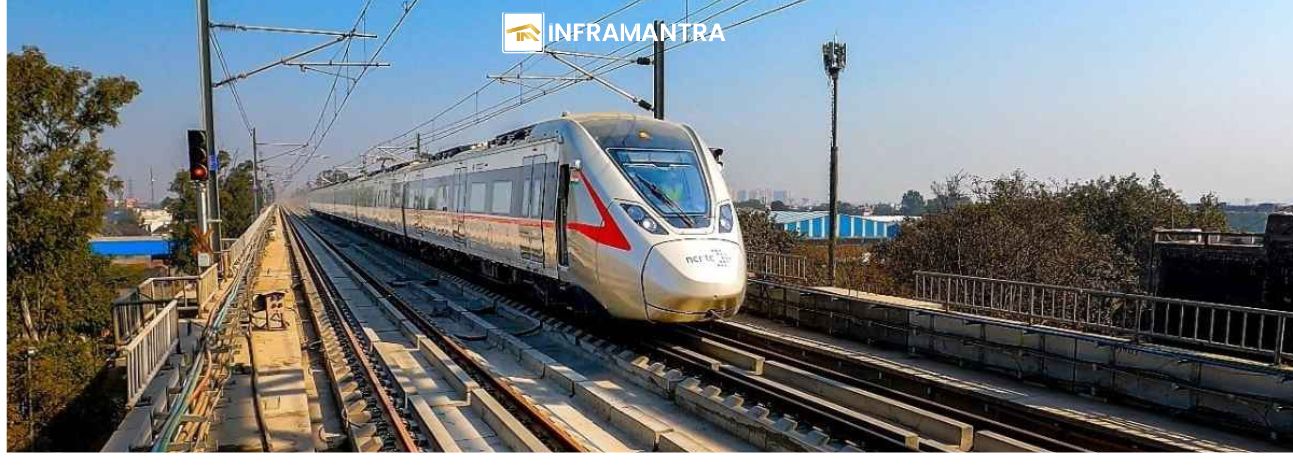
  • Delhi-Rishikesh Travel to Reduce to 3 Hours: Namo Bharat RRTS Proposed

    Delhi-Rishikesh Travel to Reduce to 3 Hours: Namo Bharat RRTS Proposed

    The Delhi to Rishikesh journey that at present takes around 5-6 hours through highway could soon be cut back to just 3 hours with the proposed Namo Bharat RRTS Extension. The Central Government is actively exploring the possibility beyond the existing northern network. The project came into motion after the high-level talks between Union Minister, Mr. Manohar Lal Khattar and the Uttarakhand Chief Minister, Mr. Pushkar Singh Dhami.  

    As per the proposed plan, the extension would start from Modipuram terminal in Meerut along NH-58 corridor, with stations at Daurala, Sakauti, Khatauli, and Purkazi (that are currently under consideration), close to the UP-Uttarakhand border, ending at Jwalapur in Rishikesh and Haridwar before reaching Roorkee.   

    As per the Tribune, Rs.750 cr. investment has been already set by the state for key infrastructure upgrades which includes automatic power systems as well as underground cabling for high-speed transportation across the eco-sensitive Kumbh region. If the plan gets approved, hefty capital investment would be required, similar to the cost involved in developing the Delhi-Meerut RRTS line. 

    The move is expected to raise the demand for rental villas, homestays, and holiday homes in the foothills up to 200%, as NCR gets well-connected to Uttrakhand. 

    At present in the proposal and planning phase, the project is being developed  with the aim to aid long-distance tourism with rapid urban transit. This, if successfully executed, will make the NAMO Bharat RRTS network a strategically vital rail infrastructure in North India. 

    For more real estate updates, visit INFRAMANTRA

  • Delhi-Dehradun Expressway Inaugurated on April 14, 2026, Triggers Real Estate Boom Across NCR

    Delhi-Dehradun Expressway Inaugurated on April 14, 2026, Triggers Real Estate Boom Across NCR

    The newly inaugurated Delhi-Dehradun Expressway, a 213-km stretch launched by Prime Minister Narendra Modi on April 14, is set to transform travel and real estate dynamics in North India. The corridor will drastically reduce travel time between Delhi and Dehradun from over six hours to just 2.5 hours, benefiting regions across Delhi, Uttar Pradesh, and Uttarakhand.

    Real estate experts are optimistic about the long-term impact of this major infrastructure project, particularly on land, plotted, logistics, and warehousing sectors. Towns such as Muzaffarnagar, Saharanpur, and the outskirts of Dehradun, along with junction towns near key interchanges, are expected to witness an increase in demand. These areas could also see a rise in logistics hubs, warehouses, and commercial real estate developments.

    In addition to residential growth, Dehradun is projected to experience a surge in luxury second-home demand. The enhanced connectivity will attract buyers seeking weekend and holiday properties in the region. “The Delhi-Dehradun Economic Corridor will boost real estate valuations in North India, with demand rising for residential and commercial properties,” said Mr. Santhosh Kumar, Vice Chairman of ANAROCK Group.

    Experts also forecast that the expressway will increase property values in the range of 15% to 25% in several key Delhi-NCR locations, driving up interest in plots, villas, builder floors, and holiday homes. Industrial parks in Baghpat and a logistics hub in Ghaziabad will further fuel demand for both residential and commercial real estate.

    The warehousing segment stands to benefit significantly. According to Mr. Vimal Nadar, National Director of Research at Colliers India, the expressway will facilitate enhanced regional connectivity, stimulating industrial and warehousing demand across micro-markets in Delhi NCR. “We anticipate an infusion of 1-2 million sq. ft. of Grade A supply in these areas in the coming years,” he noted.

    The project, which spans Delhi, Uttar Pradesh, and Uttarakhand, was completed at a cost of Rs. 12,000 crore. It connects to major routes such as the Delhi-Mumbai Expressway and Eastern Peripheral Expressway, improving connectivity to key industrial hubs. Additionally, the expressway will soon be extended to Mussoorie, with Rs. 1.3 lakh crore worth of infrastructure projects underway across Uttarakhand, further boosting regional growth.

    For more news and updates visit INFRAMANTRA

  • Golf Course Extension Road Leads NCR Realty Boom with Massive 379% Growth

    Golf Course Extension Road Leads NCR Realty Boom with Massive 379% Growth

    The real estate dynamics of Gurugram are witnessing a notable transformation, with Golf Course Extension Road emerging as the most sought-after residential corridor, surpassing Dwarka Expressway in both demand and value growth.

    According to a recent report, the micro-market recorded an extraordinary 379% year-on-year rise in transaction value between 2024 and 2025, increasing from Rs.693 crore to Rs.3,319 crore. Alongside this surge, the weighted average property price climbed sharply from Rs.24,855 per sq.ft. to Rs.37,899 per sq.ft., highlighting strong buyer interest in premium housing.

    Industry data indicates a broader upward trend. Average property prices along Golf Course Extension Road currently hover around Rs.22,000 per sq.ft., significantly higher than Dwarka Expressway’s Rs.18,000 per sq.ft. This gap reflects a clear shift in investor and homebuyer preference toward more upscale developments.

    Properties in Golf Course Extension Road, Gurgaon”

    Experts suggest that saturation along Golf Course Road has pushed developers and buyers toward the extension corridor. Leading real estate developers have already secured significant land parcels in the area, paving the way for more luxury projects in the near future.

    Over the past five years, property values along the approximately 6-kilometre stretch connecting Golf Course Road to Vatika Chowk have more than doubled, from around Rs.8,800 per sq.ft. in 2019 to over Rs.20,000 per sq.ft. in 2024. Notably, Sector 66 has recorded a 112% rise in prices, underscoring the rapid appreciation across the corridor.

    Connectivity remains a key advantage. The area enjoys seamless access to major routes such as the Delhi-Jaipur Expressway, Sohna Road, and the Southern Peripheral Road. Infrastructure upgrades, including a model road project with smart lighting and cycling tracks, are further enhancing its appeal. The upcoming Namo Bharat Regional Rapid Transit System is expected to significantly improve connectivity and boost property values.

    Properties in Southern Peripheral Road

    The corridor has also become a magnet for luxury housing, attracting high-net-worth individuals, NRIs, and corporate executives. Prominent residential projects such as Trump Tower Gurgaon and M3M Golf Estate highlight the shift toward high-end living.

    Market experts note that the region has seen property appreciation ranging from 30% to 70% over the past year, along with rising rental yields and strong absorption of new inventory. With a combination of premium developments, improving infrastructure, and strategic location advantages, Golf Course Extension Road is fast redefining Gurugram’s luxury real estate landscape. Once considered the future growth corridor, Dwarka Expressway now faces stiff competition as Golf Course Extension Road cements its position as the city’s new symbol of affluence and aspirational living. 

    Sourcehttps://indianexpress.com/

    You may also like to read:-

    New Circle Rates Announced: Property Prices to Rise in Gurgaon

    Jewar Airport Ready for Takeoff: Features, Capacity and Launch Details

    18 Metro Stations Planned as Gurugram-Faridabad Line Aligns with Namo Bharat Corridor

  • New Circle Rates Announced: Property Prices to Rise in Gurgaon

    New Circle Rates Announced: Property Prices to Rise in Gurgaon

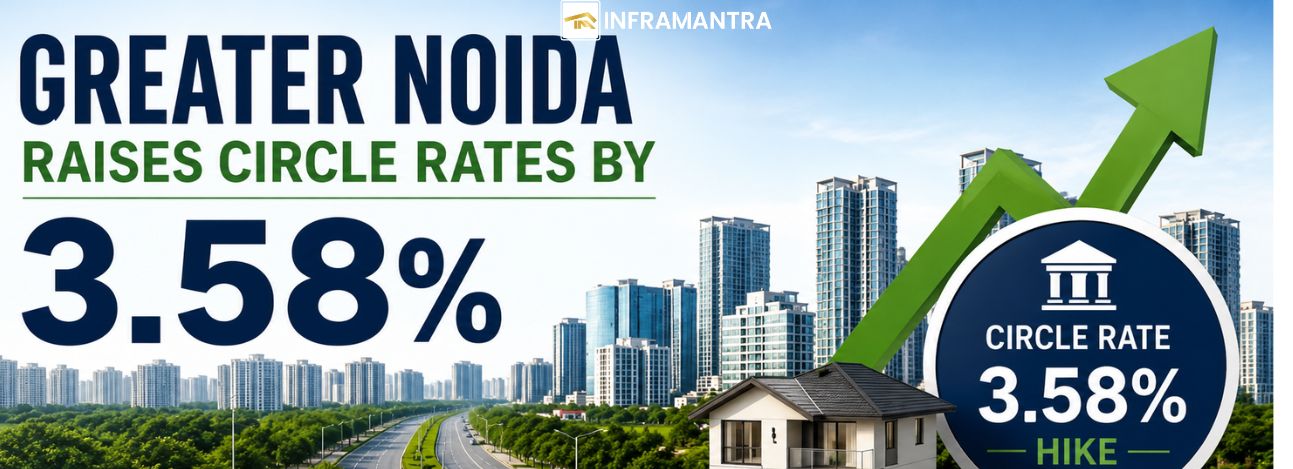
    The district administration has proposed a significant revision in circle rates across Gurugram, with increases ranging from 8% to 77% for residential properties and up to 145% for agricultural land in select areas. Officials confirmed that the revised rates are part of a broader exercise across Haryana to update collector rates for the financial year 2026-27.

    The new rates are scheduled to come into effect from April 1, 2026, after a public consultation process. Authorities stated that the revision aims to bridge the gap between prevailing market prices and officially notified circle rates, ensuring greater transparency in property transactions.

    According to a district government spokesperson, the proposed rates have been made available online for public review. Citizens were invited to submit objections and suggestions until 4:30 pm on March 30.

    Circle rate refers to the minimum value at which a property- residential, commercial, industrial, or agricultural, can be registered. These rates vary by location and are determined by the district administration. Property transactions cannot legally be registered below these notified rates.

    In prime locations such as Golf Course Road, circle rates have been increased by an average of 10% to 20%. For premium residential developments like the Magnolias, Aralias, and the Camelias, rates have been revised from Rs. 39,400 per sq.ft. to Rs. 43,340 per sq.ft. Similarly, for projects such as DLF The Crest and DLF The Icon, rates have increased from Rs. 18,900 per sq ft to Rs. 20,790 per sq ft. Residential flats and group housing societies in sectors 15, 27, 28, 30, and 31 are also expected to see an average rise of around 10%.

    The most substantial hikes have been proposed along the Dwarka Expressway. In sectors 99 to 110, circle rates for commercial land have jumped by 75%, from Rs. 1,44,000 per square yard to Rs. 2,52,000 per square yard. Residential land rates in these sectors have increased by 45%. In Kadipur and Harsaru tehsils, residential plot rates along the expressway have risen from an average of Rs. 40,000 to Rs. 65,000 per square yard.

    Additionally, sectors such as 104 and 115 have recorded increases between 62% and 67%, with rates climbing from approximately Rs. 40,000-44,000 per square yard to Rs. 66,125-70,000. Circle rates for flats in group housing societies in these areas have also surged from Rs. 4,000 per sq ft to Rs. 7,000 per sq ft.

    In Badshahpur tehsil, private licensed colonies along Sohna Road, including projects by Tulip, Central Park Resorts, Tatvam Villas, and M3M, are expected to witness an average increase of 10%, with rates ranging between Rs. 7,700 and Rs. 11,500 per sq ft.

    Rural areas have also seen steep revisions. In Bajghera village, agricultural land rates have risen by 75%, from Rs. 4.30 crore per acre to Rs. 7.53 crore. Similarly, residential land rates in Sarhaul village have increased by 75%, from Rs. 27,500 to Rs. 48,125 per sq metre.

    Other districts in Haryana are also witnessing similar trends. In Karnal tehsil, agricultural land rates in Baldi village have increased by up to 75%, with values rising from Rs. 3 crore per acre to Rs. 5.25 crore. Villages such as Sangoha, Sheikhpura, Churni, and Kailash are likely to see comparable hikes.

    In Faridabad tehsil, agricultural land rates in Tajupur village have increased from Rs. 1.3 cr.  to Rs. 2.28 cr. per acre, showcasing a rise of 75%. The Kheri Kalan village may see an increase of 45% in the rates (Rs. 5.56 cr. per acre). 

    Commercial property rates in HUDA Sector 16, of up to 500 square yards are expected to rise by 75%, while the residential rates could increase by 25%. In addition to this, Panchkula is also expected to witness commercial property hikes of up to 75% across multiple sectors.

    In an official statement, Gurugram revenue officer Mr. Vijay Yadav said that the revision follows directives from the Revenue and Disaster Management Department of the Haryana Government. He added that all proposals from various tehsils and sub-tehsils have been uploaded to the district’s official website to facilitate public feedback. Residents were encouraged to review the proposals and submit their objections or suggestions within the stipulated deadline.

    For more Real Estate Updates, visit Inframantra

  • Jewar Airport Ready for Takeoff: Features, Capacity and Launch Details

    Jewar Airport Ready for Takeoff: Features, Capacity and Launch Details

    The much-anticipated Noida International Airport is expected to be inaugurated later this month, with Mr. Yogi Adityanath confirming that an invitation has been sent to Mr. Narendra Modi for a formal launch on March 28.

    Speaking at an event in Lucknow, the Chief Minister highlighted the rapid expansion of aviation infrastructure in the state. Uttar Pradesh currently operates 16 domestic and four international airports, with Jewar set to become the fifth international gateway.

    Once operational, the airport is poised to emerge as India’s largest aviation hub. In its first phase, it will feature a single runway and an integrated terminal designed to handle up to 12 million passengers annually. Authorities have already secured the aerodrome license, and long-term plans include expanding the airport to five runways.

    Organic SocialAreas such as Greater Noida, Noida, Ghaziabad, and Bulandshahr are likely to benefit from increased economic activity, tourism, and job creation. Initially, around 150 flights are projected to operate daily.

    Spread across approximately 1.38 lakh square metres, the terminal will be equipped with 48 check-in counters, nine security screening lanes, and nine immigration desks. Separate lounges will cater to domestic and international passengers. The airport will also feature 10 aerobridges, 28 aircraft parking stands, and a runway capable of handling nearly 30 aircraft movements per hour.

    A modern cargo hub is also part of the project, starting with a capacity of 2.5 lakh tonnes annually, with plans to scale up to 1.5 million tonnes in the future. Passenger convenience will be enhanced through digital solutions such as biometric-based DigiYatra processing and self-service baggage drop facilities.

    Sustainability remains a key focus, with provisions for solar energy generation, rainwater harvesting systems, and infrastructure to support electric vehicles. 

    Visit INFRAMANTRA for Real Estate updates:-

  • 18 Metro Stations Planned as Gurugram-Faridabad Line Aligns with Namo Bharat Corridor

    18 Metro Stations Planned as Gurugram-Faridabad Line Aligns with Namo Bharat Corridor

    The Haryana government is considering a plan to operate metro services along the proposed Namo Bharat corridor connecting Gurugram and Greater Noida, marking a significant shift in regional transit planning. The proposal has been put forward by the Haryana Mass Rapid Transport Corporation to the National Capital Region Transport Corporation for inclusion in the project’s Detailed Project Report (DPR).

    Under the revised plan, a total of 18 metro stations are expected to be developed along the route, with eight located in Gurugram and ten in Faridabad. A key highlight of the proposal is the integration of metro services with the high-speed Namo Bharat network at major junctions.

    One of the primary interchange hubs will be at Iffco Chowk, where the new metro line will also connect with the existing metro network. Additional stations in Gurugram are planned at Sector-29, Millennium City Centre, Sector-52, Wajirabad, and Sector-57. Another major interchange is proposed at Sector-61, linking the corridor to a future metro line between Sector-56 and Pachgaon.

    In Faridabad, the metro is proposed to run along a 16-kilometre stretch of the Namo Bharat track, beginning at Sainik Colony and extending to Badshahpur. This segment is expected to significantly improve connectivity for daily commuters and reduce reliance on private vehicles, thereby easing traffic congestion across the region.

    Given the high operational speed of Namo Bharat trains, estimated between 160 and 180 km/h,  noise pollution has emerged as a concern. To address this, HMRTC has recommended the installation of noise barriers, particularly in densely populated areas along the corridor. These measures aim to minimize the impact on nearby residential zones. 

    If approved, the integrated corridor could become a major boost for public transport infrastructure in Haryana and the wider National Capital Region.

    For more real estate updates, visit INFRAMANTRA

  • India’s New Rent Rules 2026: Key Updates to the Model Tenancy Act

    India’s New Rent Rules 2026: Key Updates to the Model Tenancy Act

    India’s rental housing sector is set to undergo significant changes with the implementation of the new rent rules 2026 under the Model Tenancy Act framework. The updated regulations aim to create a more transparent and balanced system for both tenants and landlords by introducing digital processes, clear legal protections, and faster dispute resolution mechanisms.

    One of the most notable changes is the mandatory registration of rent agreements. Authorities have emphasized that verbal or informal arrangements will no longer carry legal weight. Every tenancy must now be supported by a written agreement that is registered with the designated Rent Authority within 60 days of signing. The process is expected to be largely digital, with agreements stamped and submitted through state-level online portals.

    Once registered, each tenancy will receive a unique identification number. This ID will serve as an official reference for any legal matters or disputes related to the rental agreement.

    Cap on Security Deposits

    The new rules also introduce limits on security deposits, a long-standing concern among tenants. For residential properties, landlords will only be allowed to charge a maximum deposit equivalent to two months’ rent. For commercial or non-residential properties, the limit is set at six months’ rent.

    Additionally, landlords must return the security deposit on the day the tenant vacates the property, after deducting legitimate repair costs if necessary. Routine wear and tear cannot be used as grounds for deductions.

    Rules on Rent Increase

    The regulations set clearer guidelines on rent revisions. Landlords can increase rent only once within a 12-month period. They are required to give tenants a written notice at least 90 days before the new rent comes into effect, unless the rent escalation clause has already been defined in the agreement.

    Mid-term rent increases are generally prohibited unless the landlord has undertaken significant structural improvements with the tenant’s approval.

    Privacy and Entry Guidelines

    To protect tenant privacy, landlords must provide at least 24 hours’ notice before entering the rented premises. Visits for inspections or repairs are permitted only between sunrise and sunset. 

    However, the notice requirement does not apply in emergency situations such as fires, flooding, or other natural emergencies where immediate access may be necessary.

    Responsibilities for Repairs

    The new framework also clarifies maintenance responsibilities. Structural repairs, including major plumbing issues, external electrical wiring, and painting, will typically fall under the landlord’s duties. Tenants, on the other hand, are responsible for everyday upkeep such as minor fixture repairs, cleaning drains, and replacing small fittings.

    If a landlord fails to complete essential structural repairs within 30 days of receiving notice, tenants are allowed to arrange the repairs themselves and deduct the expenses from their rent.

    Eviction and Overstay Penalties

    Eviction procedures are expected to become faster under the revised system. Landlords can approach Rent Tribunals in cases such as non-payment of rent for two months or more, property misuse, or structural damage caused by tenants.

    Tenants who remain in the property after the lease expires may face financial penalties. The rules specify that overstaying tenants can be charged twice the monthly rent for the first two months, and four times the rent for each month thereafter until the property is vacated.

    Faster Dispute Resolution

    The dispute resolution process has been shifted away from traditional civil courts to a specialized three-tier system consisting of the Rent Authority, Rent Court, and Rent Tribunal. These bodies are expected to resolve most rental disputes within a 60-day period, aiming to provide quicker relief for both tenants and landlords.

    Overall, the new rent rules seek to modernize India’s rental ecosystem by combining legal safeguards with digital governance, potentially making renting more structured and secure for millions across the country.

    For more real estate updates, visit INFRAMANTRA.

  • GMDA’s Rs.755 Crore Road Project to Boost Connectivity on SPR

    GMDA’s Rs.755 Crore Road Project to Boost Connectivity on SPR

    The Gurugram Metropolitan Development Authority (GMDA) has invited bids for the construction of an elevated corridor along the Southern Peripheral Road (SPR), a project estimated to cost around Rs.755 crore. The proposed infrastructure upgrade aims to ease traffic congestion and enhance connectivity between major road networks in Gurugram.

    Officials said the plan involves building a 4.2-kilometre signal-free elevated corridor between Vatika Chowk and National Highway 48. The elevated stretch will feature four lanes in each direction (4+4 configuration), providing an additional traffic layer to improve mobility along one of the city’s busiest corridors.

    In addition to the elevated section, the project includes the development of 3+3 lane primary service roads and 2+2 lane secondary service lanes to support local traffic movement. Two-lane entry and exit ramps are also planned at key intersections to ensure smoother access for commuters.

    To further streamline traffic flow, an interchange will be constructed at NH-48, enabling seamless connectivity with the national highway network. Another interchange has been proposed at Vatika Chowk to link the SPR corridor with the Gurugram–Sohna Elevated Corridor.

    Highlighting the need for improved road infrastructure, Mr. P.C. Meena, Chief Executive Officer of the Gurugram Metropolitan Development Authority, said Gurugram’s rapid urban expansion requires high-capacity transport networks to support increasing mobility demands and sustain economic growth.

    Once completed, the corridor is expected to provide faster connectivity between the Dwarka Expressway, NH-48 and the Gurugram-Sohna corridor. The project is also likely to ease traffic pressure at busy junctions such as Vatika Chowk and Subhash Chowk.

    At present, many commuters travelling from Dwarka Expressway or southern Gurugram towards Sohna or Faridabad rely on internal city roads through Rajiv Chowk or Subhash Chowk to reach major highways. The proposed elevated corridor is expected to provide a more direct route, reducing travel time and congestion. Officials said the project is expected to be completed within 30 months from the date the contract is awarded.

    Visit Inframantra for more Real Estate Updates

  • Gurgaon’s Luxury Home Sales Jump 80% to Rs 24,120 Crore, Surpass Mumbai in 2025

    Gurgaon’s Luxury Home Sales Jump 80% to Rs 24,120 Crore, Surpass Mumbai in 2025

    Luxury home sales in Gurgaon witnessed a sharp rise in 2025, with transactions for properties priced at Rs.10 crore and above climbing 80% year-on-year to Rs.24,120 crore. The surge enabled the city to overtake Mumbai in total sales value within this premium segment.

    According to a joint report by India Sotheby’s International Realty and CRE Matrix, Gurgaon has emerged as India’s fastest-growing ultra-luxury residential market. In comparison, Mumbai recorded sales worth Rs.21,902 crore in the same price bracket during the year.

    The report highlighted that sales volumes in Gurgaon nearly tripled, rising to 1,494 units in 2025 from 519 units in 2024. Both increased transaction activity and price appreciation contributed to the record-breaking performance.

    Dwarka Expressway led the growth story, registering an extraordinary 2,079% jump in transaction value, from Rs.383 crore in 2024 to Rs.8,347 crore in 2025. The spike was driven by major luxury project launches and infrastructure upgrades. Golf Course Extension Road also posted strong momentum, with transaction values rising 379% alongside a significant increase in weighted average prices, which moved from Rs.24,855 to Rs.37,899 per sq.ft.

    In contrast, established premium micro-markets such as Golf Course Road experienced relatively slower sales due to limited fresh supply.

    The report noted that while Mumbai has traditionally dominated India’s high-end property landscape, Gurgaon has now surpassed it in total sales value for homes priced above Rs.10 crore. Analysts attribute the shift to improved infrastructure, growing corporate presence and sustained wealth creation in the Delhi-NCR region.

    The findings suggest a broader transformation in India’s luxury housing market, with demand increasingly shifting toward emerging urban corridors offering modern connectivity and large-scale premium developments.

    Reference – Gurugram outpaces Mumbai in high-end luxury residential sale

    For more Updates Visit INFRAMANTRA

  • Reliance MET City Unveils 100-Acre ‘Metropolis’ Township in Haryana

    Reliance MET City Unveils 100-Acre ‘Metropolis’ Township in Haryana

    Reliance MET City, a wholly owned subsidiary of Reliance Industries Ltd, has launched a 100-acre mixed-use development named Metropolis by MET City at Daryapur village in Jhajjar district, Haryana.

    The newly introduced project forms part of a larger 140-acre master-planned township that will feature residential plots, industrial plots, and a future group housing component. In its first phase, the company has released around 100 acres, aimed at individual homebuyers, investors, and enterprises looking to operate within the MET City ecosystem.

    Key Details of Metropolis by Reliance MET City:

    According to the company, 56 acres have been earmarked for industrial plots, while 42 acres are dedicated to residential plots. Residential plot sizes range from 112 to 179 square yards, priced between Rs.99,000 and Rs.1.10 lakh per square yard. The development is being rolled out in two phases and is ready for possession, enabling buyers and businesses to begin construction immediately.

    Mr.Shrivallabh Goyal, CEO and Whole-Time Director of Reliance MET City, said the project aligns with the vision of building integrated urban ecosystems where people can live close to workplaces. He added that the focus remains on developing a sustainable, infrastructure-driven community designed for long-term growth. The project is being developed by Model Economic Township Limited on a self-funded basis, with infrastructure and construction executed in-house.

    Strategic Location And Connectivity

    Strategically located near the Delhi border, the site is five minutes from the KMP Expressway and close to AIIMS Badsa, the upcoming Haryana Orbital Rail Corridor, and the proposed BCCI International Cricket Stadium. Spanning 8,250 acres, Reliance MET City is positioned as a smart city and global manufacturing hub, currently hosting over 650 companies from 11 countries and generating more than 40,000 jobs.

    Reference Reliance MET City launches 100-acre mixed-use project ‘Metropolis’ in Haryana

    Follow InfraMantra for more updates.